
Testing Explanations of Female Destiny
The Second SexThis thread traces the book’s examination of biology, psychoanalysis, and historical materialism, showing how each illuminates part of women’s situation but fails as a complete explanation.
increasing Bearing strength in each event
 decreasing
Bearing strength in each eventdecreasingBiological Data
Biological Data
Difference across living forms
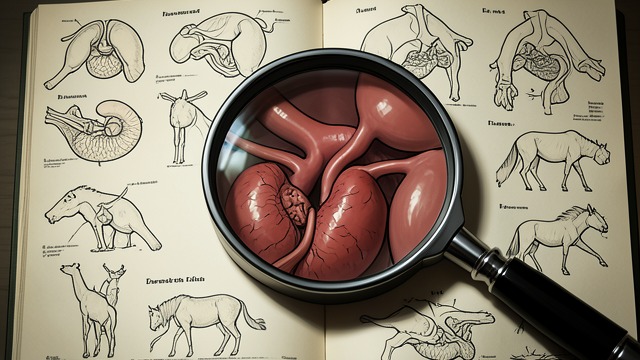
De Beauvoir begins with the animal and reproductive body, reviewing sexual differentiation, gametes, and the varied roles of males and females across species. The survey challenges any simple rule that could explain human relations directly from biology.
The human body as lived
Women’s reproductive processes can be demanding, painful, and alienating; these facts shape the body through which a person encounters the world. Yet a body is not an abstract mechanism: its meaning depends on how a person and society live it.
No fixed destiny
Biological differences do not establish a permanent hierarchy or explain why women become the Other. They are important elements of women’s situation, but the question is how humanity has taken them up in history.
The Limits of Psychoanalysis

The Limits of Psychoanalysis
Psychic meaning and sexual development
De Beauvoir credits psychoanalysis with considering the body as lived by a subject rather than merely observed as an object. She reviews accounts of girls’ development, including the theories that organize female sexuality around castration and an Oedipus-like drama.
Social value beneath the theory
She argues that such accounts often treat masculine prestige as self-evident. A girl’s supposed envy of the penis cannot be explained by anatomy alone; its meaning depends on the social privileges associated with men.
Choice and situation
Psychoanalytic descriptions become restrictive when they reduce conduct to drives and inherited patterns. De Beauvoir instead asks how sexuality acquires meaning within a person’s total situation and how freedom is involved in the choices she makes.
The Economic Explanation

The Economic Explanation
Work and property
De Beauvoir turns to historical materialism and its account of women’s subordination through changes in technology, labor, and private property. The rise of productive work and inheritance helps explain why women lost economic authority and became dependent within patriarchal families.
What economics clarifies
The materialist account correctly emphasizes that women’s prospects change with productive capacities and economic structures. Industrial work can weaken some forms of dependence and give women a route toward economic participation.
What it leaves unexplained
Economic change alone cannot explain why domination emerged or why women’s reproductive situation is not simply equivalent to a job. De Beauvoir keeps material conditions in view but places them within a broader account of existence, values, and power.
Biology Taken Up in History

Biology Taken Up in History
From fact to social meaning
The argument rejects both biological determinism and explanations that treat the body as irrelevant. Physical strength, reproduction, and the burdens of maternity matter, but their consequences vary with technology and social organization.
The human world is made
A society is not simply a species obeying nature. Customs and institutions organize bodily facts into obligations, privileges, and values; the same physical difference can carry different meanings in different conditions.
A historical question
The inquiry therefore moves beyond asking what female bodies are like. It asks how human beings have made the female into a social position and why that position has been subordinated.
Freedom as the Synthesis

Freedom as the Synthesis
Rejecting single causes
De Beauvoir refuses to explain woman through sexual drives alone or economic relations alone. The body, erotic life, and technology become intelligible only within the total perspective of human existence.
A situated freedom
People act from material conditions, but they also interpret and pursue ends within those conditions. Women’s possibilities are constrained without becoming predetermined; the meaning of bodily strength, work, and sexuality depends on the world in which they are lived.
The bridge to history
This synthesis prepares the historical chapters. To understand women’s subordination, the book must trace how societies have organized property, authority, reproduction, and the division between immanence and transcendence.
Volume I, Part One, Chapter 1
Volume I, Part One, Chapter 2
Volume I, Part One, Chapter 3
Transition from Part One to Part Two
End of Volume I, Part One
